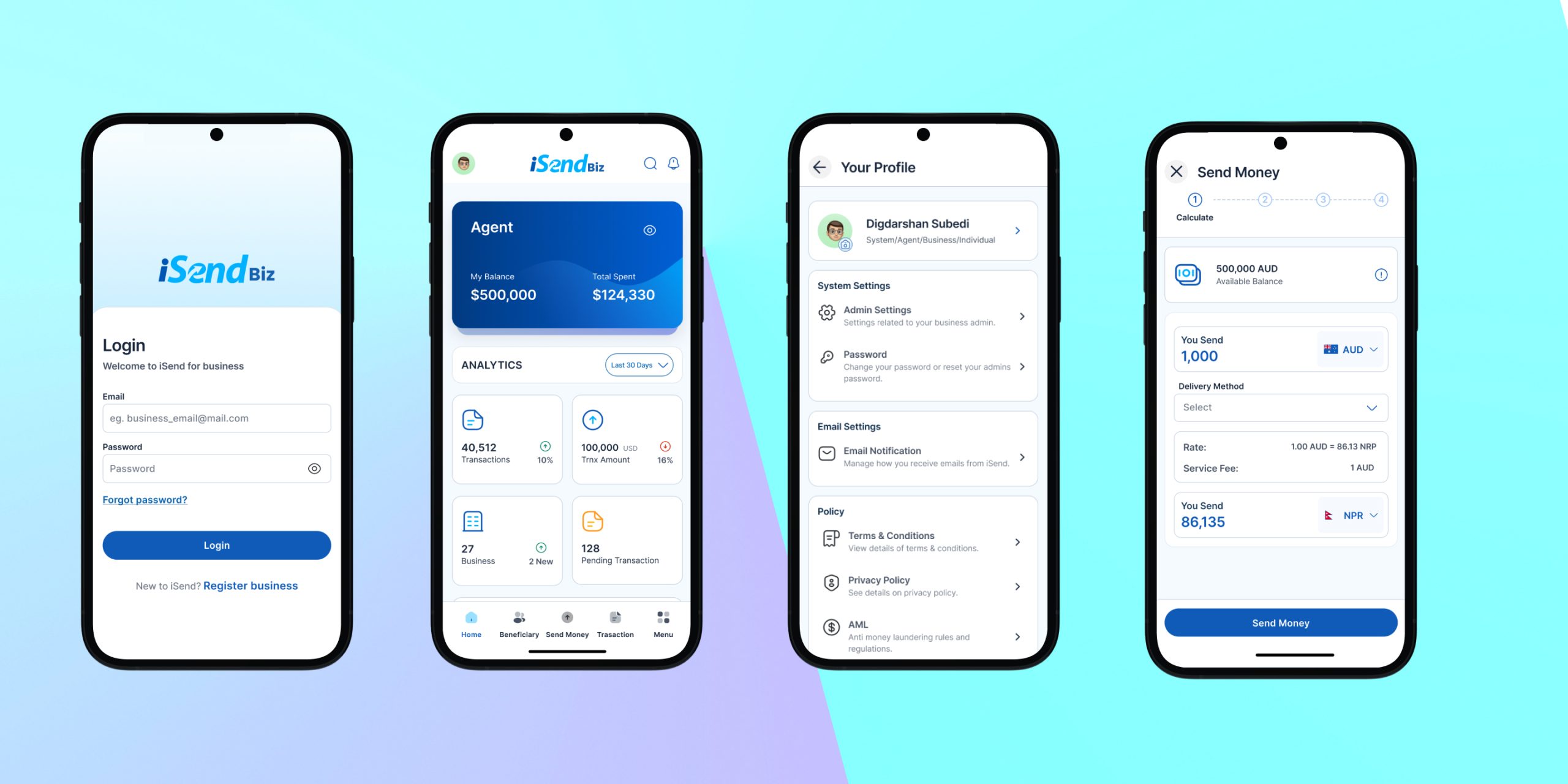
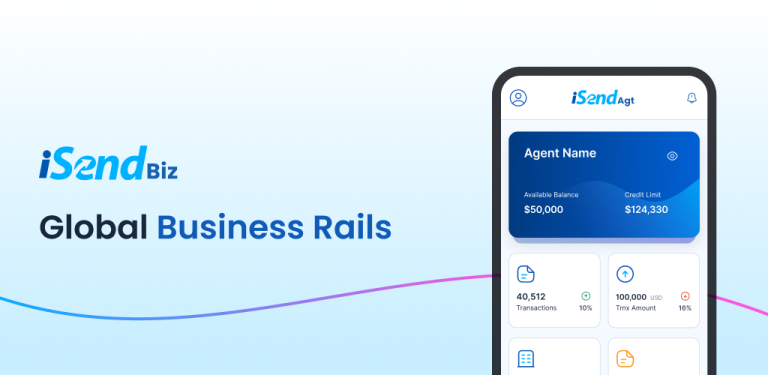
iSend Remit is a cross-border remittance platform that simplifies money transfers for individuals and businesses. It offers secure, real-time transactions, bulk payment solutions, and tailored features to ensure efficiency and compliance on a global scale.
Role
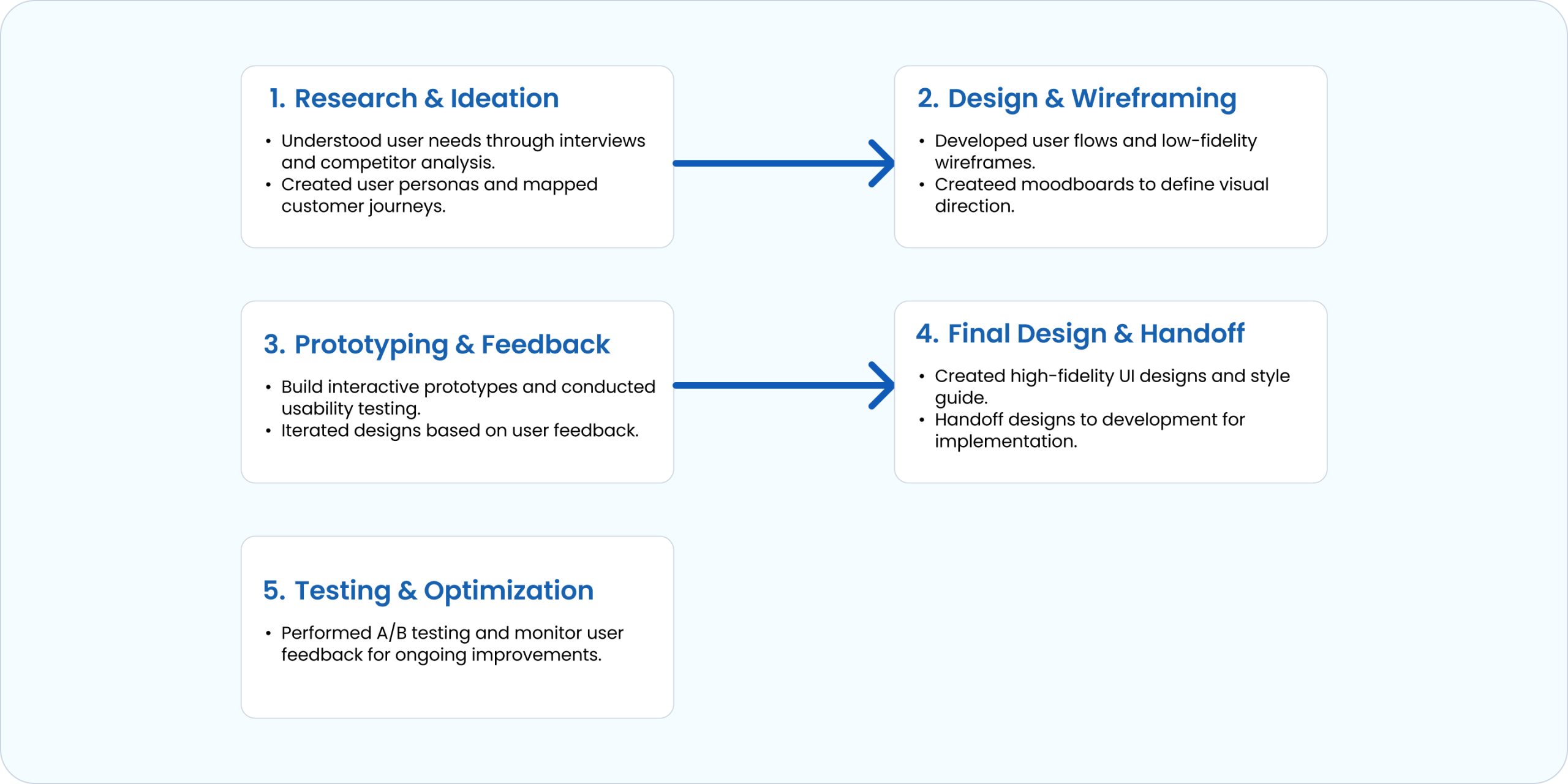
Product Designer – Led the end-to-end design process.
Ensured consistent and clear brand representation.
2. Mobile App
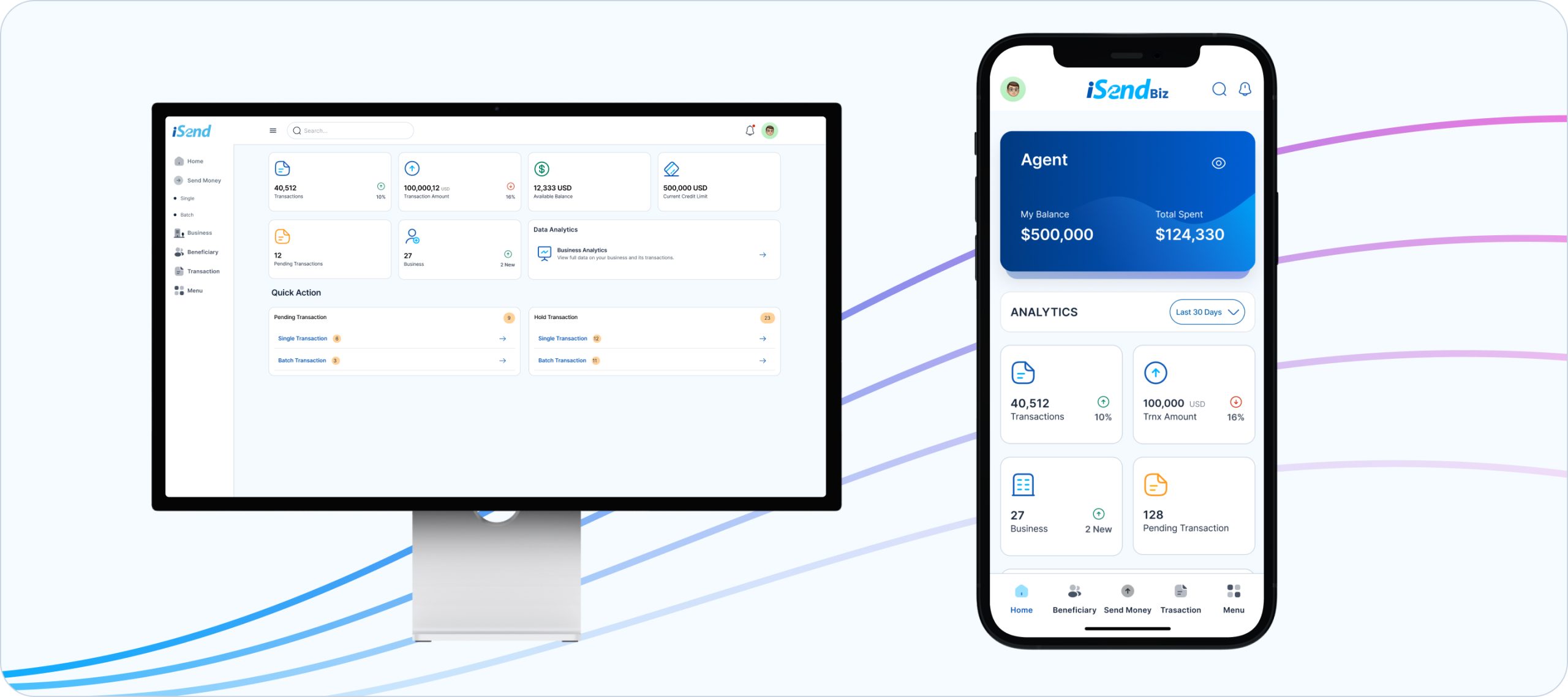
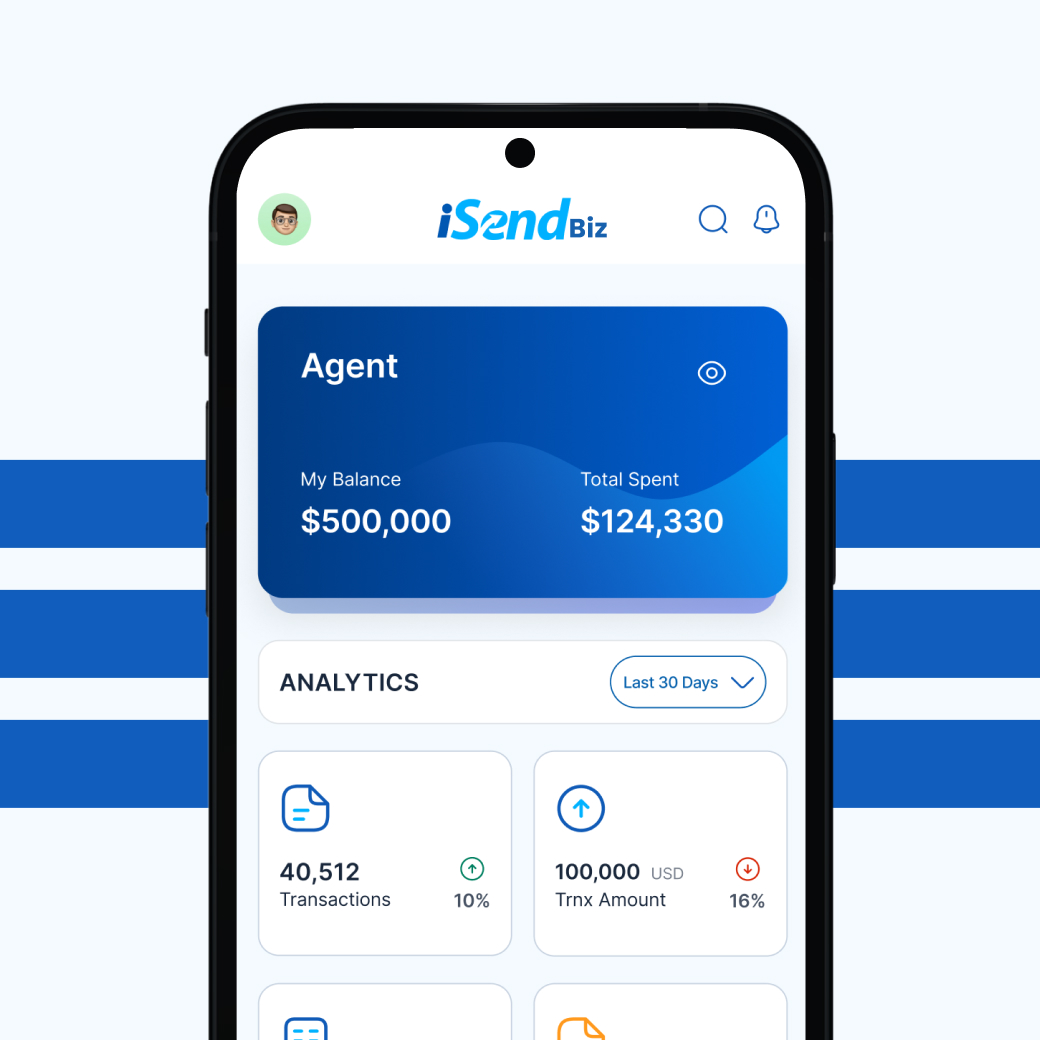
A user-friendly app for seamless transaction management on the go.
3. Web Application
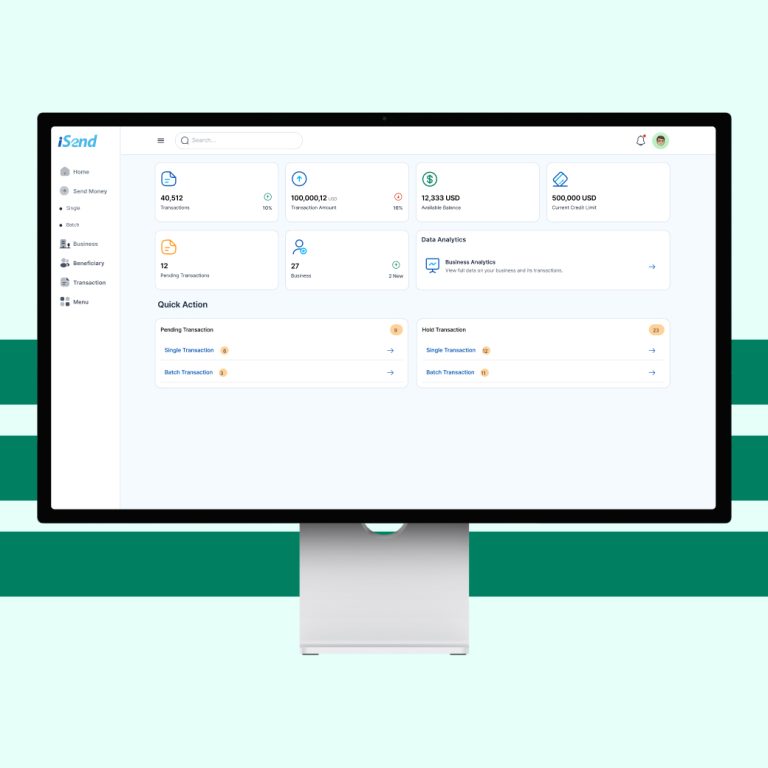
A robust platform for handling large-volume transactions and improving operational workflows.
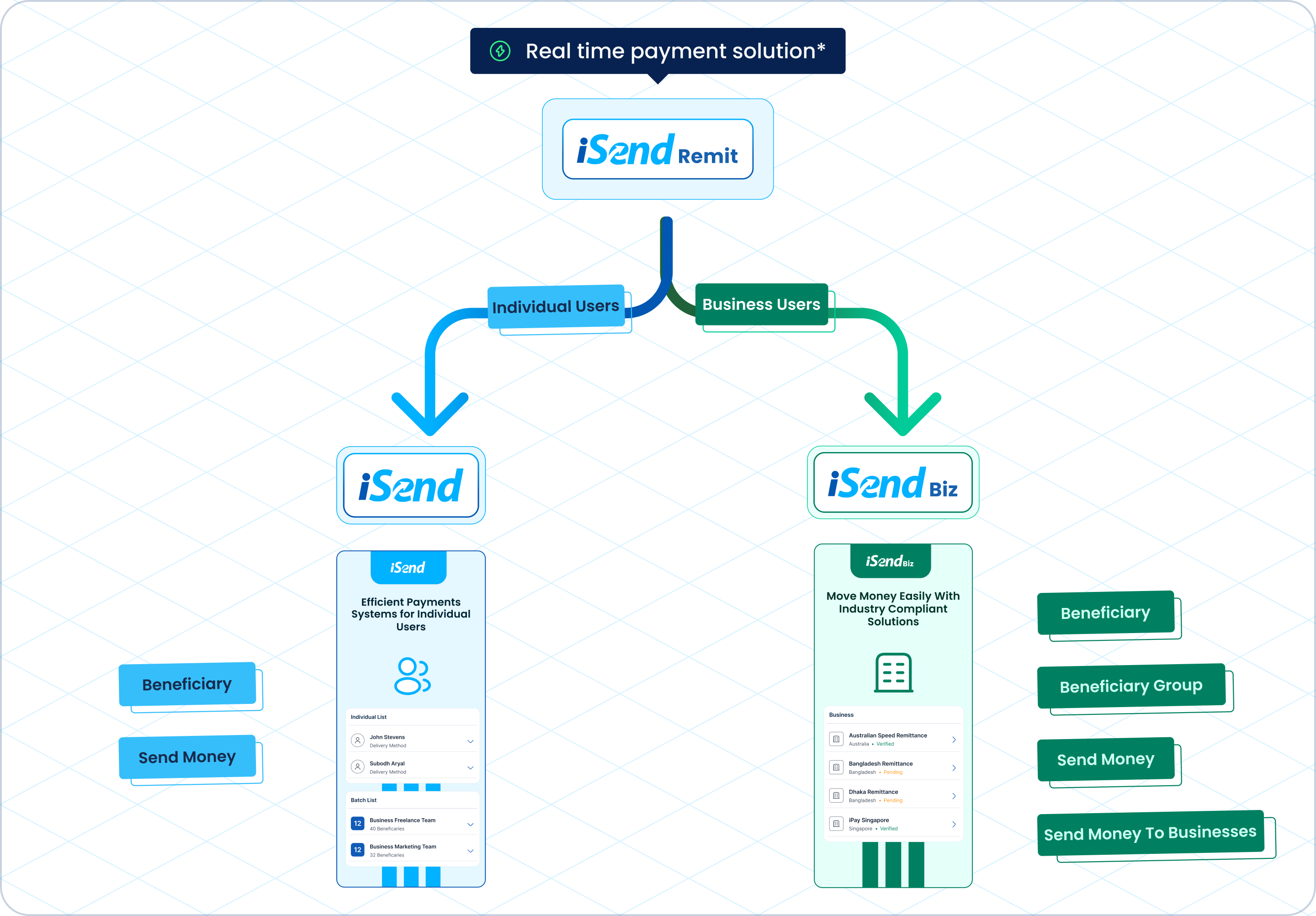
High Level Overview Of The Product
Problem Statements
Individual Customer Challenges
Inefficient Onboarding: Users face difficulties with a lengthy and confusing onboarding process which caused high user drop-off rates and low repeat usage.
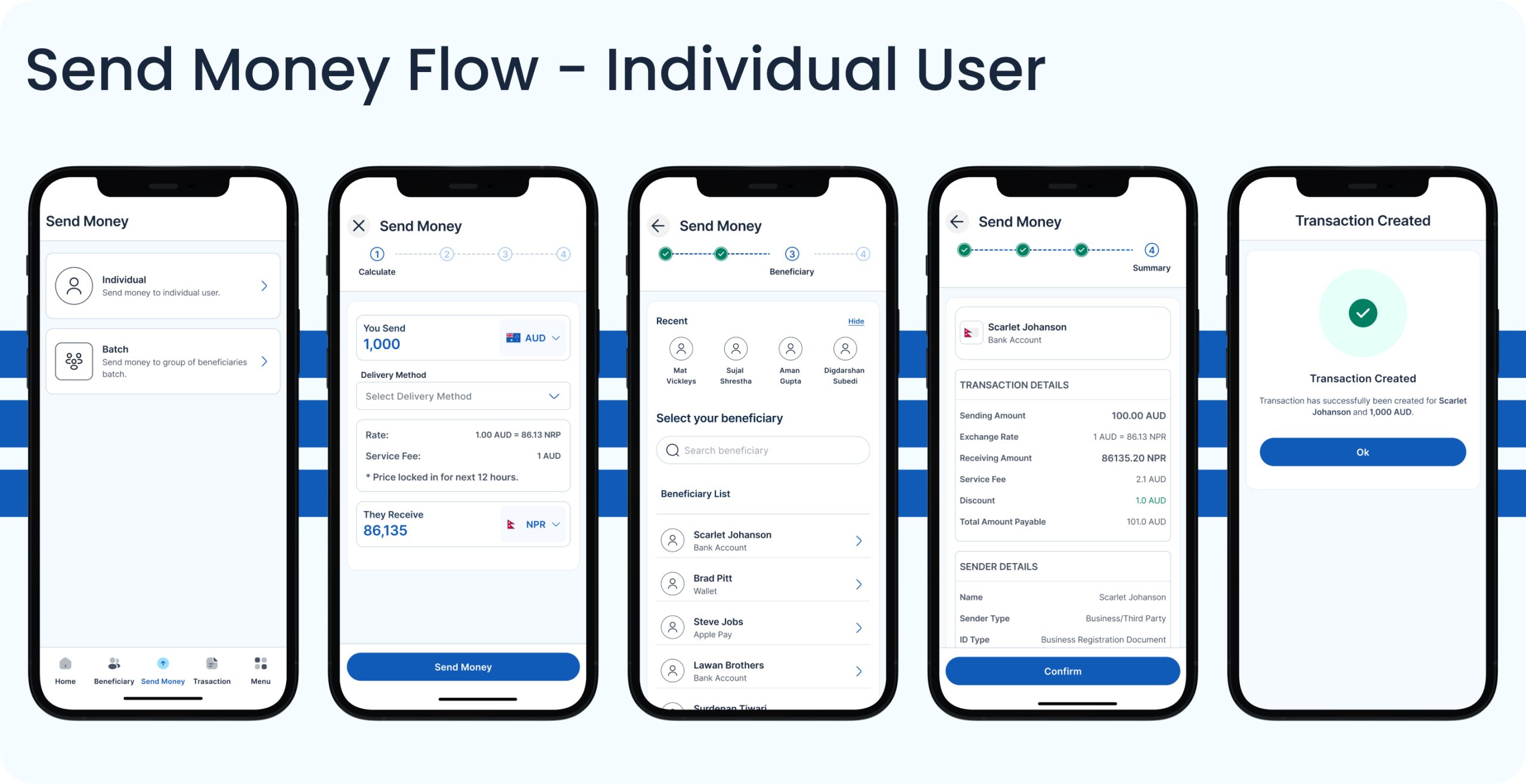
Complex User Flows: Transaction workflows are unintuitive, causing frustration and abandonment.
Limited Accessibility: The lack of web access reduces convenience and discourages users from engaging with the platform.
Business Customer Challenges
No Business-Specific Tools: The platform didn’t support bulk transactions or team collaboration.
Limited Transaction Oversight: Businesses lacked dashboards and real-time monitoring for managing large-scale transactions.
Restricted Access: The absence of a web app and role-based permissions made collaboration difficult.
Business Goals
Increase Number of Individual Users: Design intuitive user flows and simplify remittance processes to reduce friction, ensuring an easy and enjoyable experience for first-time users.
Enhance Business User Experience: Develop tailored features such as bulk transaction management, role-based access, and analytics dashboards to meet the operational needs of business customers.
Improve User Retention: Address key pain points with seamless, personalized UX solutions to foster satisfaction, loyalty, and repeat engagement.
UX Roadmap
Focused on three primary pillars:
Improving individual user experience.
Introducing features to attract business users.
Incorporating analytics and reporting for continuous iteration.
Planning Work - Work Breakdown Structure
As the sole designer, I developed a high-level work breakdown structure to plan and organize tasks effectively. This approach helped me ensure efficient time management for both myself and the development as well as product managers.
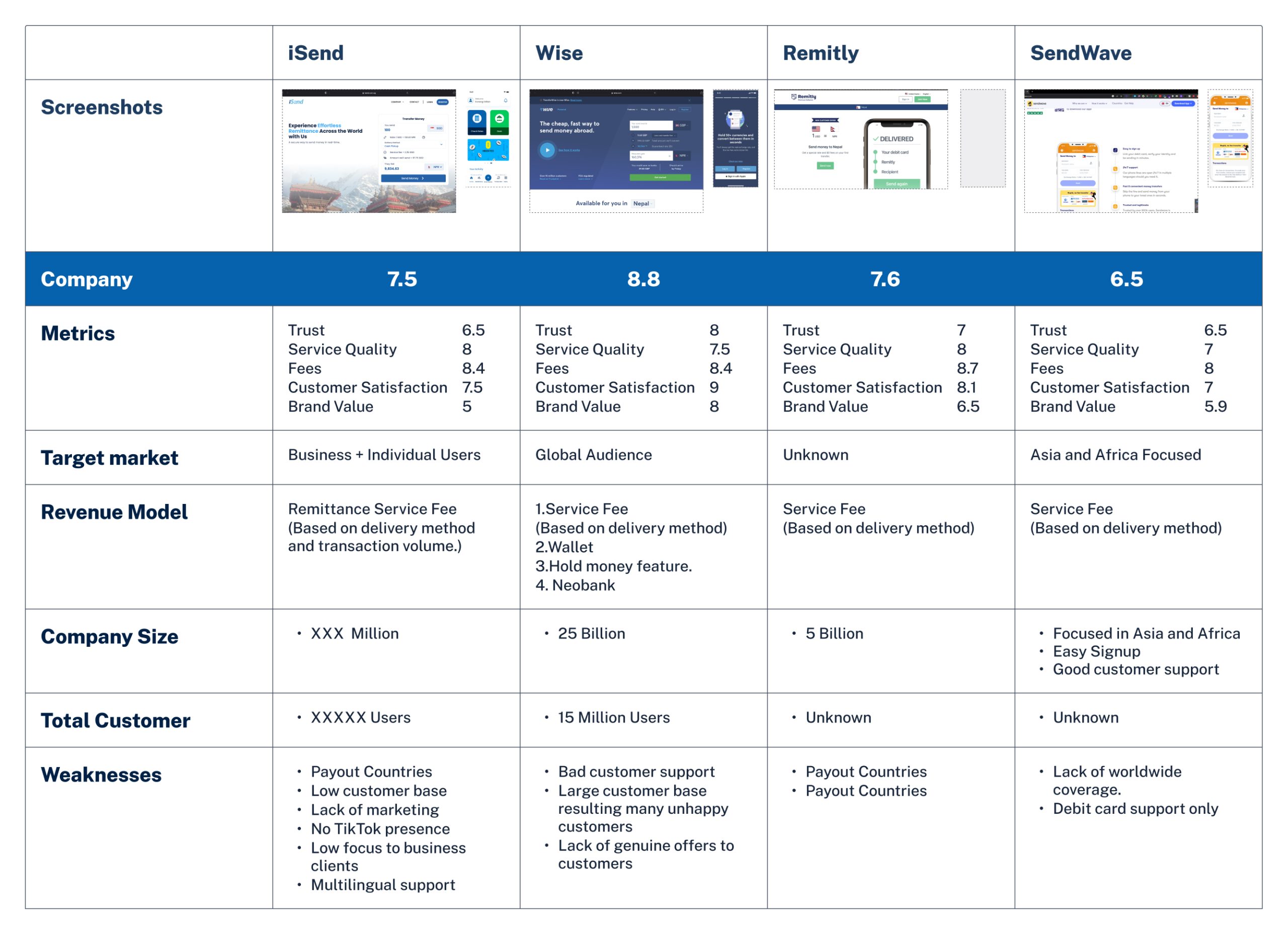
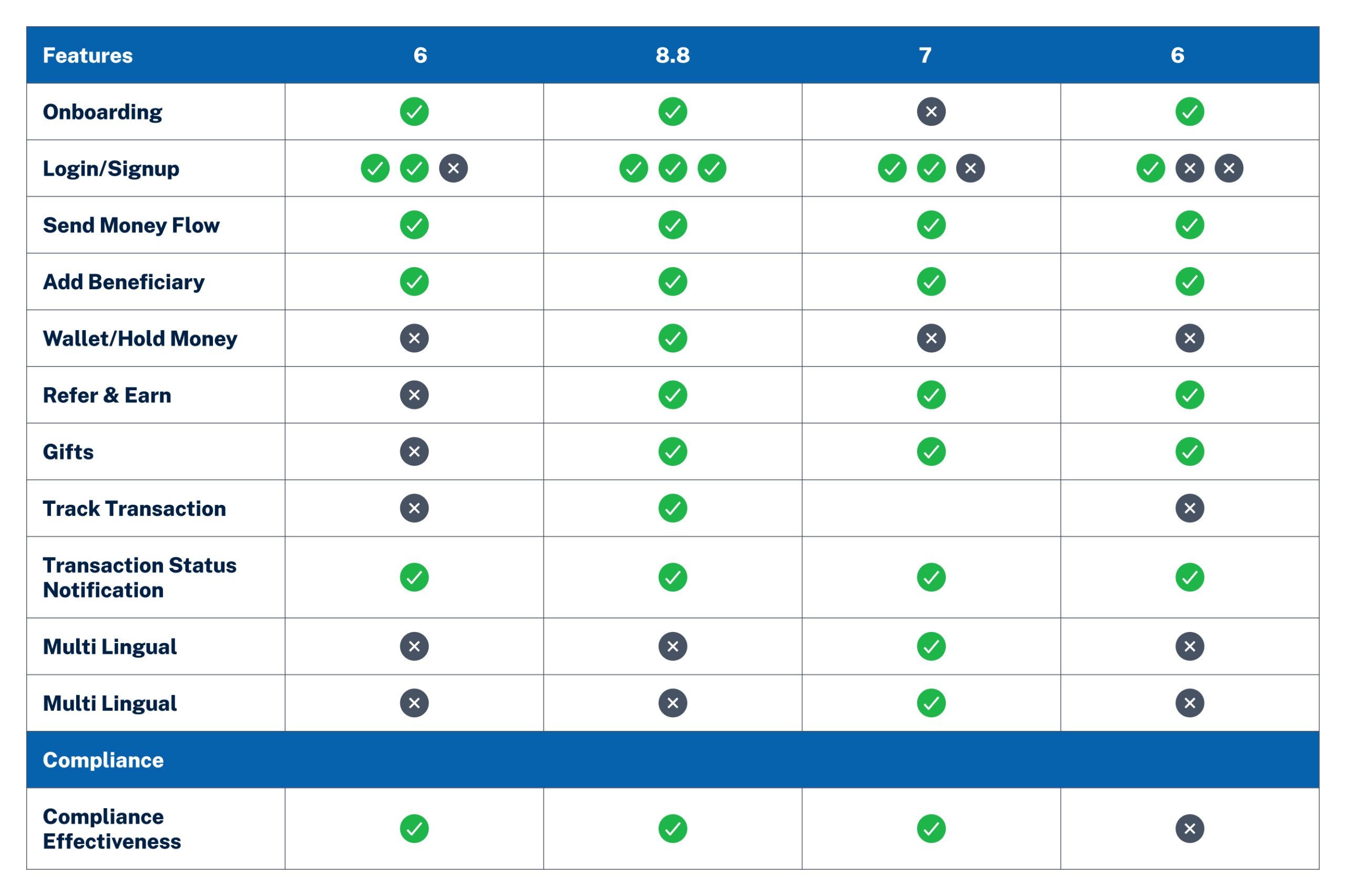
Conducted user interviews and surveys to understand why individual transactions were left incomplete. Key findings included:
Complex registration processes.
Lack of transparency on fees and timelines.
Poorly optimized user flows for transaction completion.
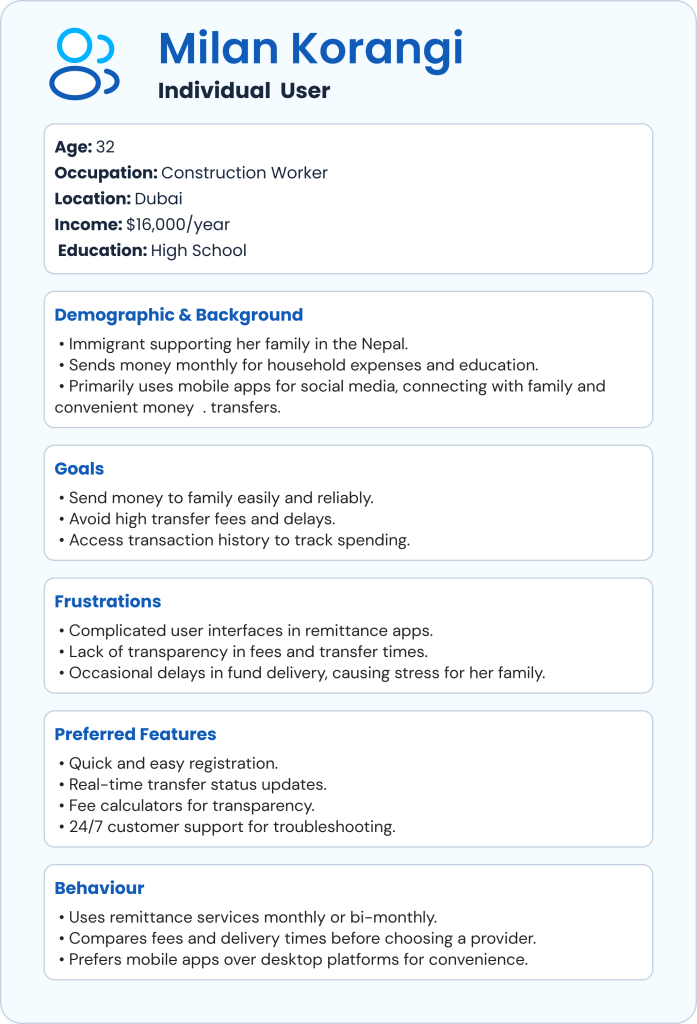
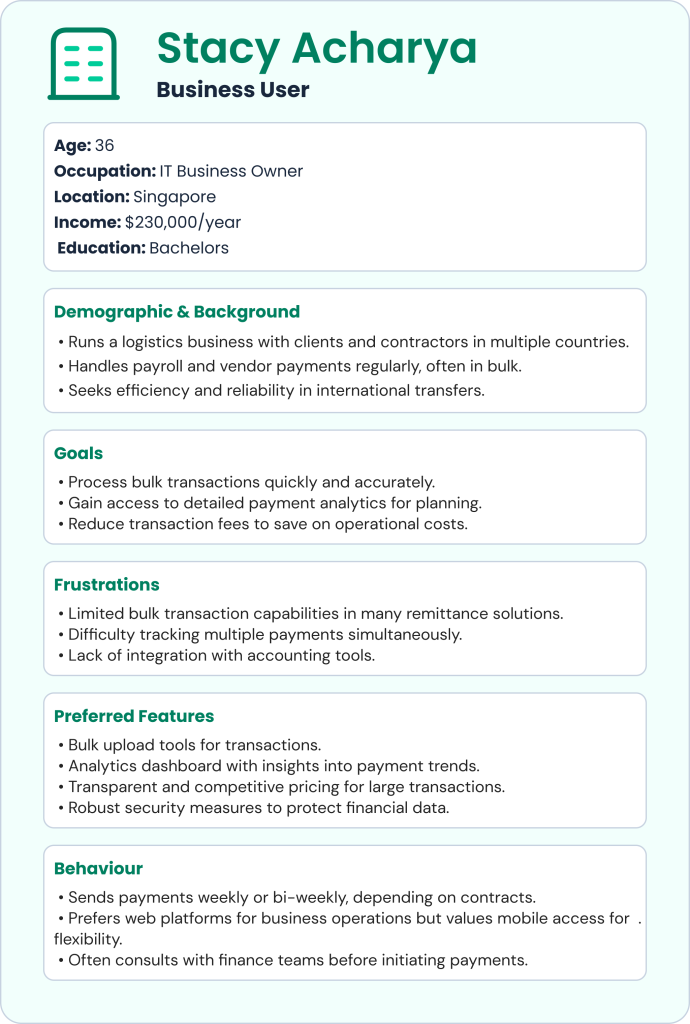
User Personas
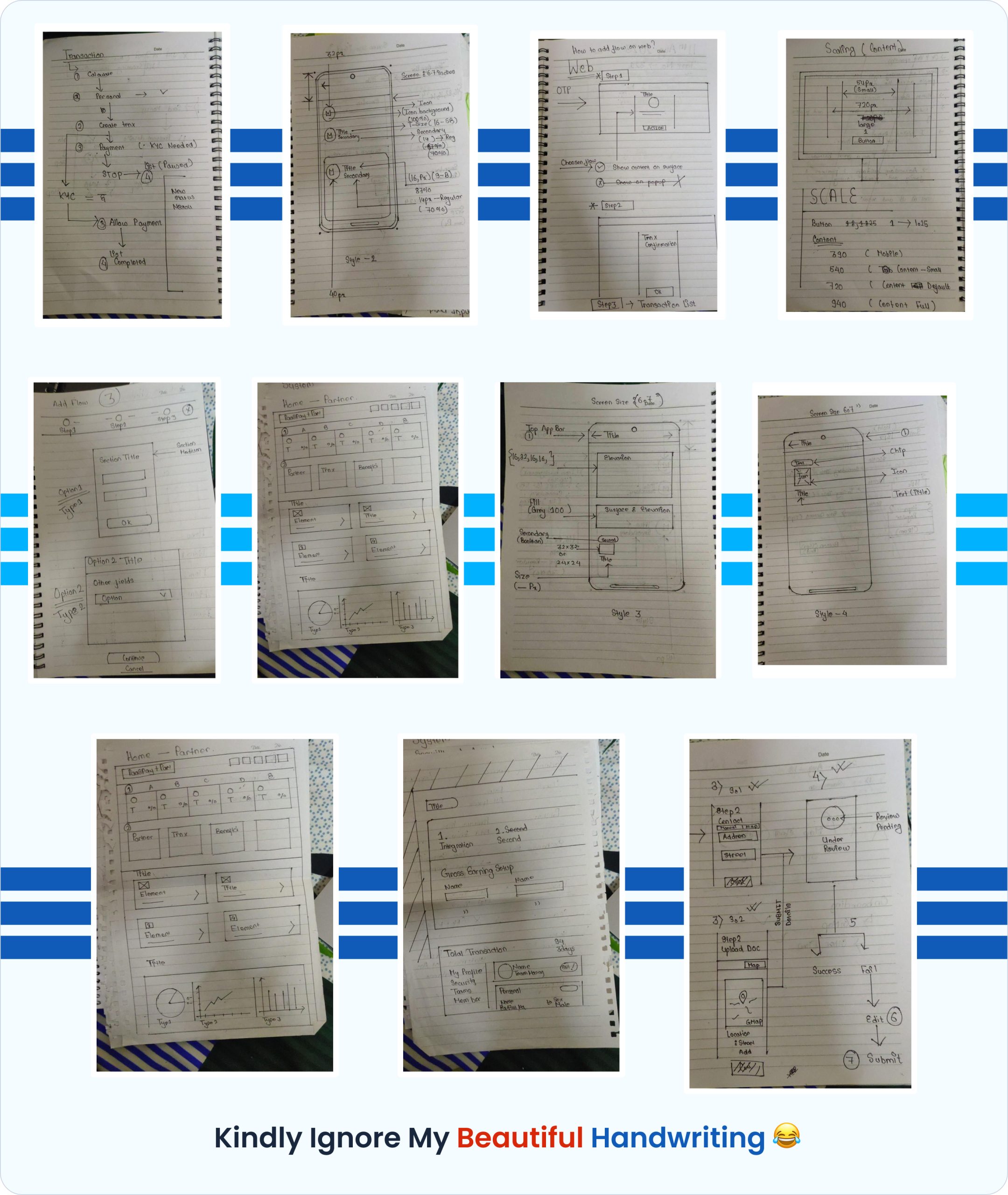
Brainstorming
Problem One
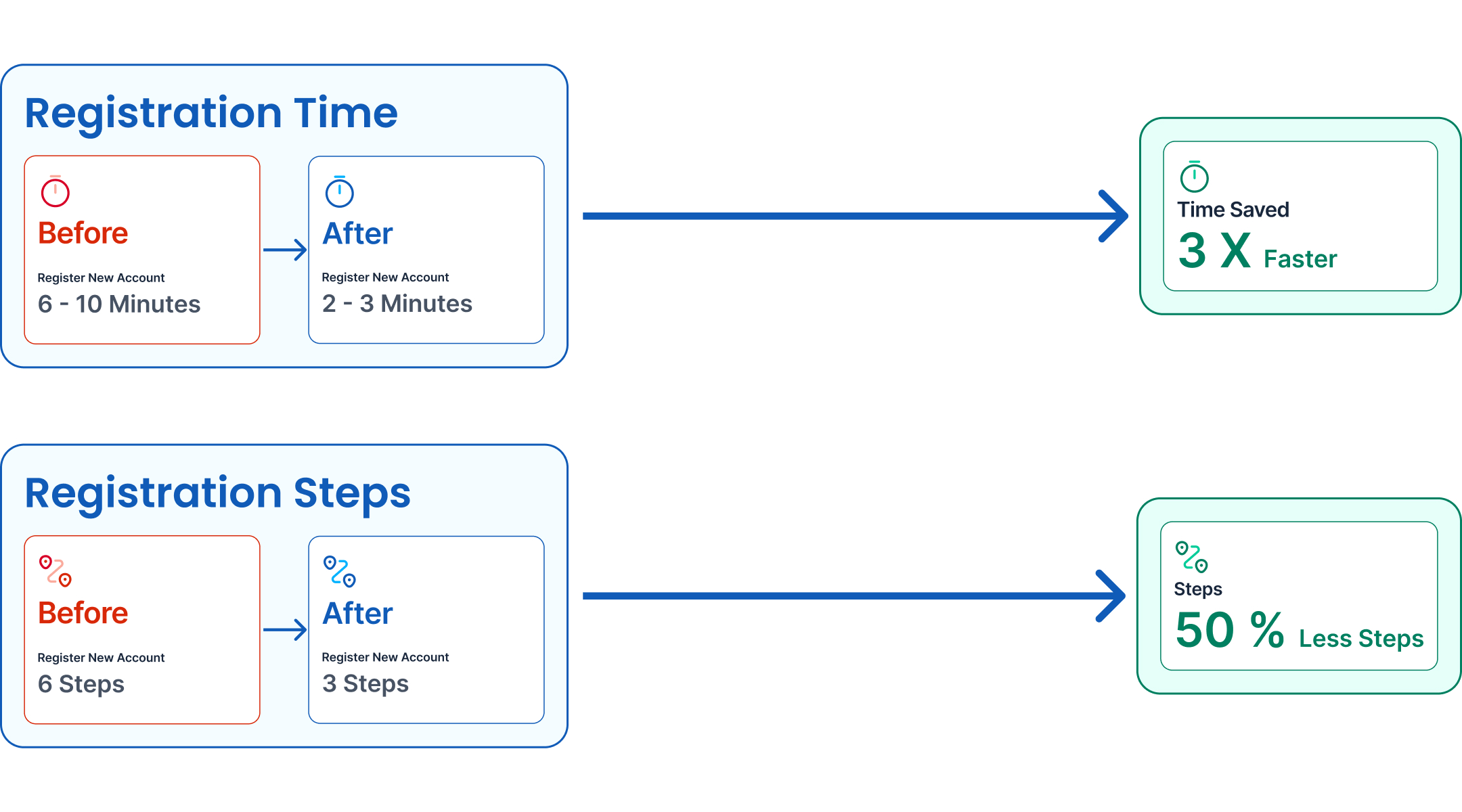
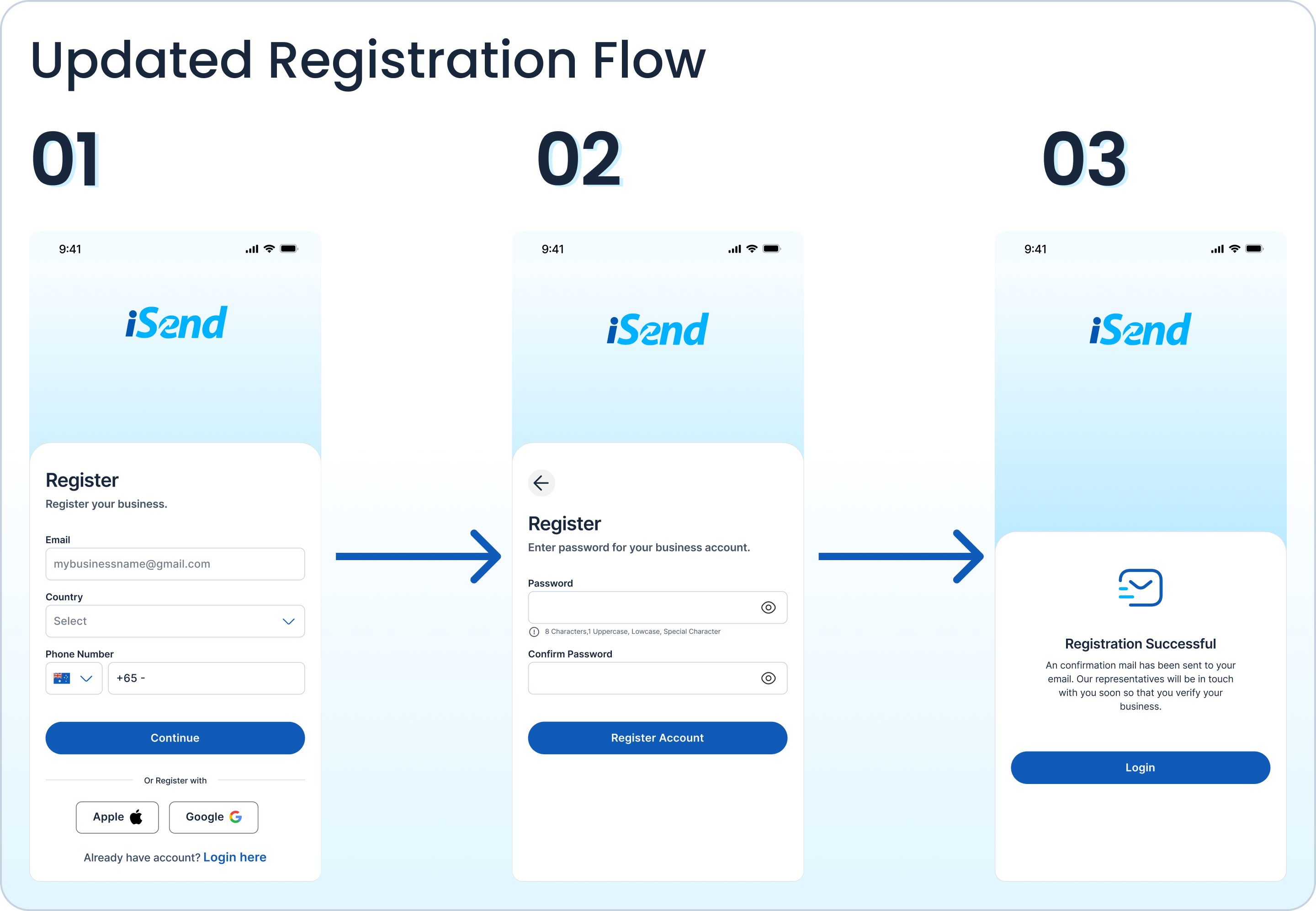
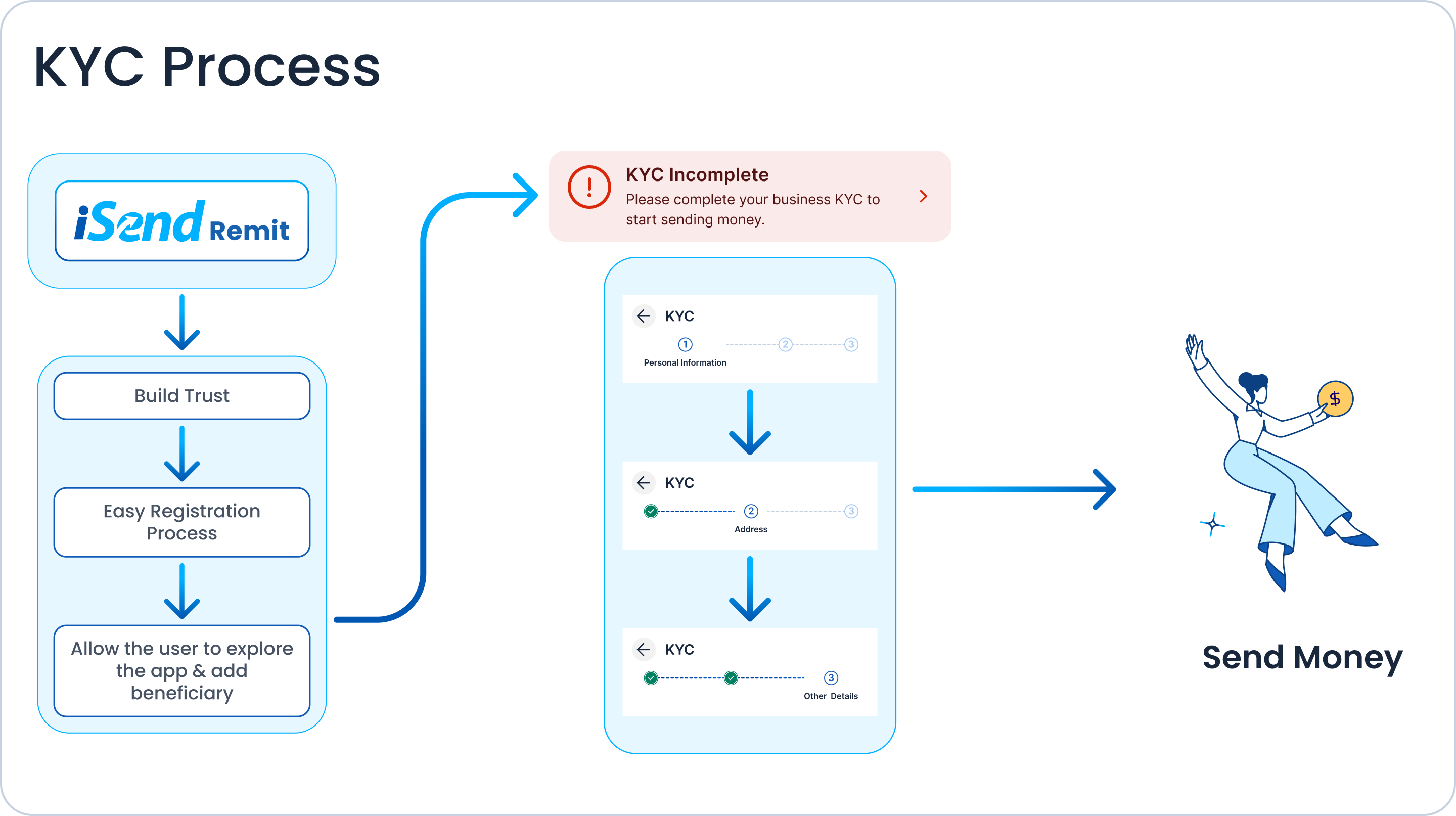
1. Customer Onboarding / Complicated KYC Process
Users were abandoning the platform even after creating accounts, opting for competitor apps. The primary issue was the complex and time-consuming flow, especially during the registration and KYC process.
How did I identify the problem?
App Analytics: Identified high drop-off rates during registration using data from the old app.
User Surveys: Gathered feedback showing users found the registration process overly complex.
User Research: Conducted usability testing to understand pain points in the onboarding flow.
While registration processes may seem standard, remittance platforms face unique challenges due to compliance regulations and regional differences. This required significant changes to our system design and APIs.
Compliance Regulations: Strict KYC and AML rules make it difficult to streamline the process.
Regional Variations: Different countries have unique requirements for documentation and verification.
System Overhaul: Addressing these challenges required redesigning workflows and APIs to ensure global compliance.
Problem Two
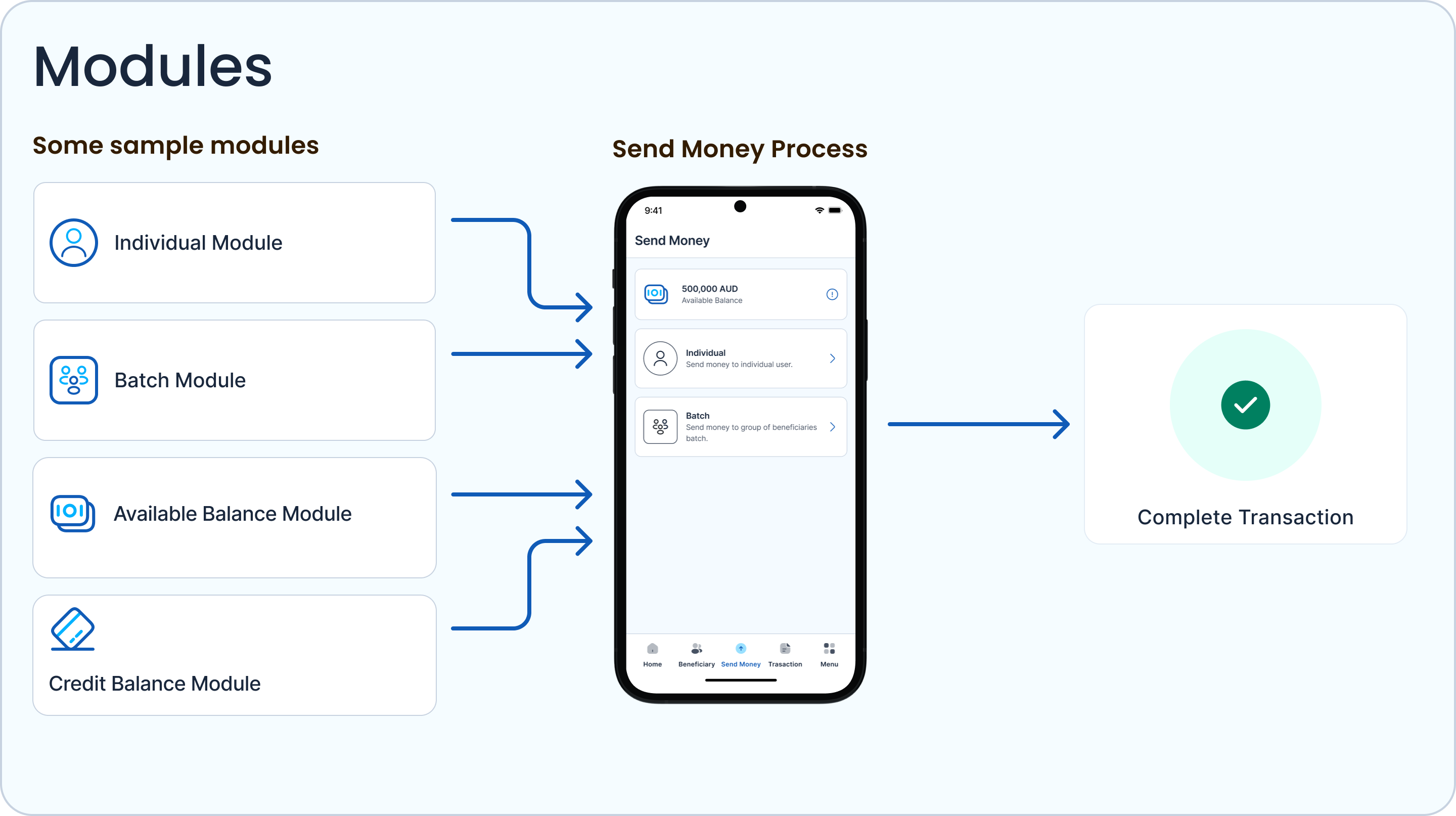
The old system had design flaws that made processes rigid and inefficient. We needed to overhaul the system for better flexibility and scalability.
Solution: Modular Design Approach
Simplified Processes: Broke down complex workflows into smaller, manageable parts.
Flexible Structure: Each module worked independently but stayed connected for seamless operations.
Easy Updates: Modular design made it easier to update and manage processes as needed.
This approach made the system more efficient, adaptable, and user-friendly.
Problem Three
System Not Tailored for Business Users
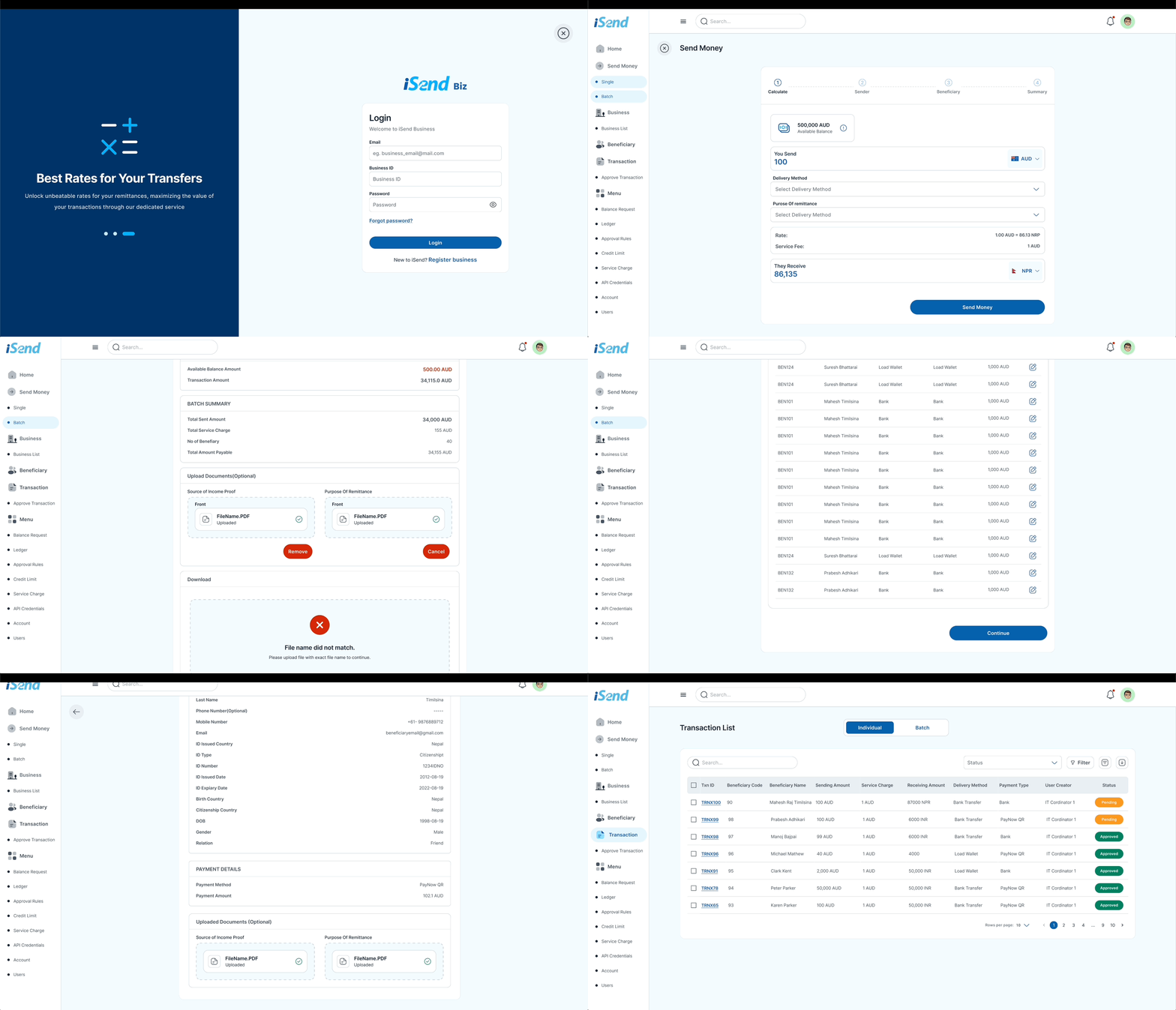
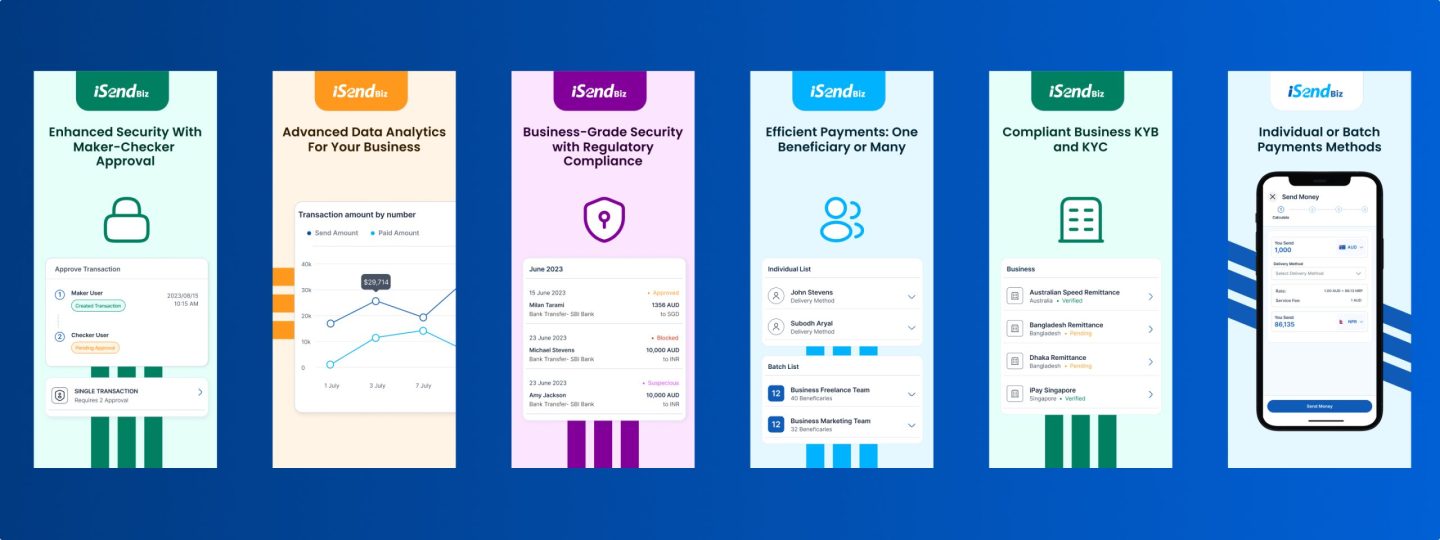
Our platform was not initially designed to support the specific needs of business users. We had to make significant modifications to the existing system to introduce features critical for businesses, such as bulk transaction management, role-based access, and robust reporting tools.
Solution: Tailoring the System for Business Needs
Bulk Transaction Management: Redesigned the process to allow businesses to efficiently handle large-scale transactions with real-time error validation and clear, step-by-step guidance.
Role-Based Access: Introduced role-specific permissions to enable businesses to assign tasks and control access to sensitive data.
Advanced Reporting & Analytics: Developed customizable dashboards that provided key metrics, real-time tracking, and detailed reporting for better decision-making.
Web Platform: Implemented a web-based interface to offer businesses flexibility in managing transactions and monitoring performance from any device.
These modifications ensured the system met the unique needs of business users, helping them with the right tools for efficient and scalable operations.
Deliverables
1. iSend Remit Mobile Application
Launching The Product
Built the marketing guidelines for the product.
Results & Impacts
70% faster system performance, reducing transaction completion time.
30% fewer errors in bulk transactions, improving accuracy and operational efficiency.
12% increase in user engagement due to simplified workflows and mobile accessibility.
400% growth in transaction volume, showcasing the scalability of the system.